 Comparison
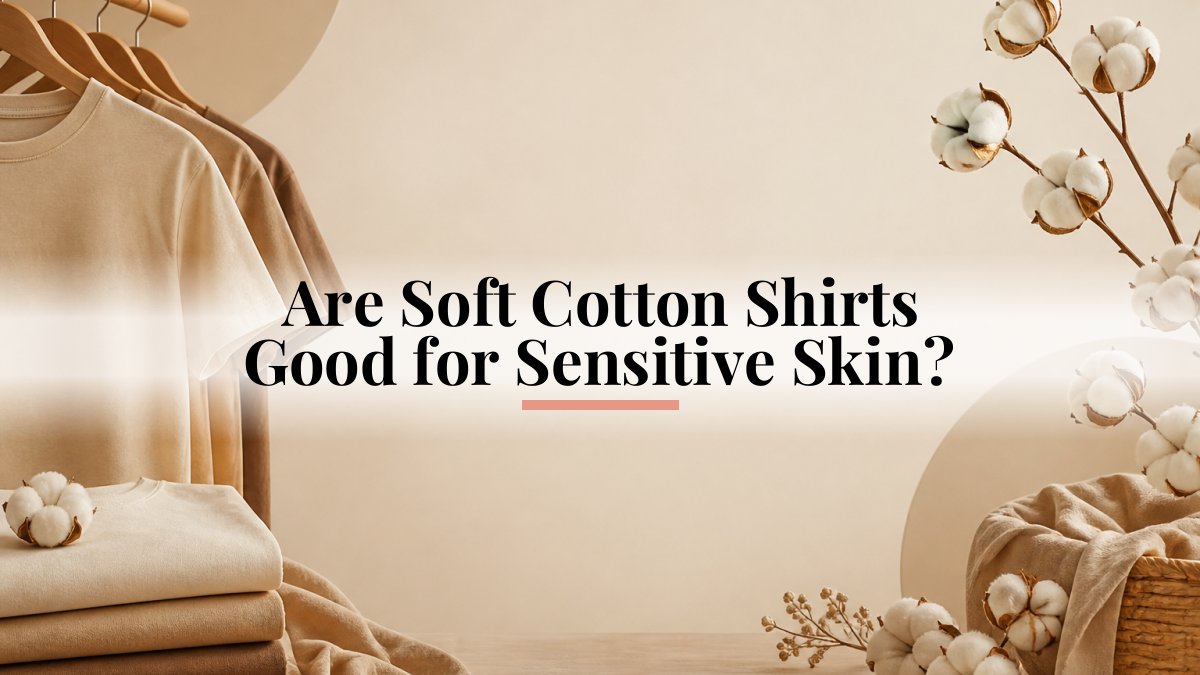
Are Soft Cotton Shirts Good for Sensitive Skin?
Last Updated: November 1, 2026
Quick Summary
Yes, soft cotton shirts are a practical starting point for sensitive skin because cotton is a natural fiber that breathes and tends to feel gentler than many synthetics. Softness depends on more than fiber alone, so yarn type, weave and weight matter too.
- Cotton breathes, helping moisture from sweat move away from the body rather than sitting against the skin.
- Ring-spun cotton is spun from longer fibers and produces a smoother, softer yarn than open-end cotton.
- Mid-weight cotton is often the most comfortable choice if you run hot or sweat easily.
- Check the fiber content on the care label, since a 100% cotton shirt behaves differently from a cotton-poly blend.
- Machine wash cold, inside out, and tumble dry on low to keep a cotton shirt soft longer.
Table of Contents
- Why Soft Cotton Shirts Suit Sensitive Skin
- Best Fabrics for Sensitive Skin Compared
- Organic Cotton Shirts for Sensitive Skin: Is the Label Worth It?
- Cotton Type, Weave and Shirt Weight
- Tagless Shirts for Sensitive Skin and Construction Details
- How to Soften Cotton Shirts and Keep Them Soft
- Choosing Your Next Soft Cotton Tee
- Frequently Asked Questions
If you have sensitive skin, a soft cotton shirt made from natural fibers is a practical place to start. Cotton's natural fibers tend to feel gentler than many synthetics, and the right weight and construction can make a real difference. Here's how to tell what works, and what to look for before you buy.
Why Soft Cotton Shirts Suit Sensitive Skin
Cotton is a natural fiber, and it breathes. That airflow helps moisture from sweat move away from the body rather than sitting against the skin, which is a common source of irritation for sensitive skin. A cotton shirt also tends to feel less scratchy than rougher blends, especially after several washes.
Softness does not come from the fiber alone. The yarn, the weave and the finishing process all shape how a shirt feels. Ring-spun cotton, for example, is spun from longer fibers that produce a smoother, softer yarn than standard open-end cotton. Our tees use 100% ring-spun cotton on most colorways.
If you want to understand why cotton feels gentle to some people and not others, start with fiber length and yarn smoothness. Those two factors matter more than the label alone. For a deeper look at identifying soft cotton before you buy, see our guide on how to tell if cotton shirts are soft.
Best Fabrics for Sensitive Skin Compared
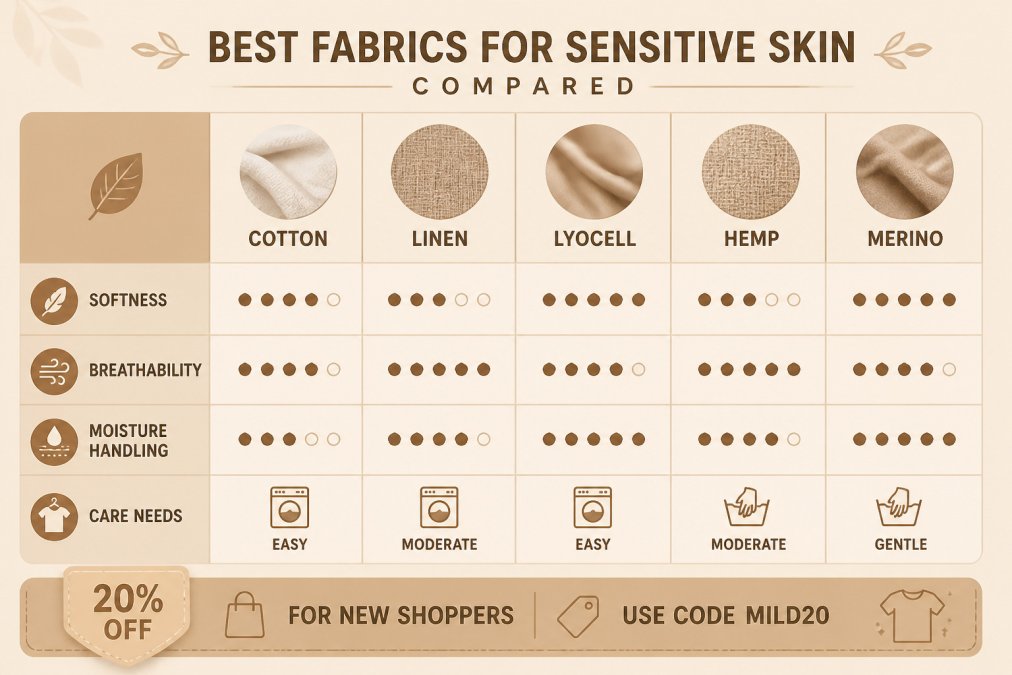
Cotton is not the only option. Reactions to any fabric vary by individual. The right choice depends on what you need most: softness, breathability, moisture handling, easy care, or a specific sensory preference. The comparison below focuses on how each fiber behaves in a shirt, not on marketing claims.
| Fabric | Softness | Breathability | Moisture Handling | Care Needs | Common Trade-off |
|---|---|---|---|---|---|
| Cotton | High, especially ring-spun | High | Absorbs moisture | Machine washable | Can feel stiff when new; heavier weights trap heat |
| Linen | Firm at first, softens over time | Very high | Dries quickly | Wrinkles easily | Texture may feel rough to very sensitive skin |
| Lyocell | Very smooth | High | Good moisture management | Gentle wash | Can pill with friction; less durable than cotton |
| Hemp | Stiffer at first | High | Absorbs moisture | Softens with washing | Long break-in period; coarser hand than cotton |
| Merino wool | Soft for wool | Moderate | Wicks moisture | Hand or gentle wash | Lanolin and fiber scales can irritate some skin |
Cotton is a common choice for daily wear. Lyocell is a good alternative if you want a silkier feel, but it may not hold up as long under frequent washing. Linen suits hot weather but takes several washes to soften, and its natural texture can feel scratchy to people with very reactive skin. Hemp softens with use but has a longer break-in period. Merino wool wicks moisture well, yet some people react to its fiber scales or to residual lanolin.
Cotton type, weave and shirt weight
Three details shape how a cotton shirt feels against sensitive skin: the cotton type, the weave and the weight of the fabric.
Longer-staple cotton produces smoother yarn. Ring-spun yarn is more even and less likely to pill, which keeps the surface comfortable over time. Open-end yarn is faster to produce but coarser, which is why it often feels rougher against the skin. The weave affects how the fabric drapes and how much air passes through it: a jersey knit stretches and moves with the body, while a woven poplin or oxford is more structured and can feel crisper at first.
Weight is measured in ounces per square yard or grams per square meter. Our tees are 4.5 oz/yd² (153 g/m²), which is substantial enough to hold its shape but still breathable. Heavier shirts can feel warmer and more structured. Lighter ones feel airy but may show more wear. If you run hot or sweat easily, a mid-weight cotton is often the most comfortable choice.
How to compare fabrics for your own skin
Because individual sensitivities vary, treat any fabric comparison as a starting point rather than a verdict. A common pattern is to test one variable at a time: wear a single fabric for a full day, note how it feels after two or three washes, and pay attention to seams and finishes as much as fiber content. If you want more detail on choosing between these materials, read our breakdown of the best fabrics for sensitive skin.
Organic Cotton Shirts for Sensitive Skin: Is the Label Worth It?
Organic status describes how the cotton was grown, not how soft the finished shirt will be.
Cotton Type, Weave and Shirt Weight
Three details shape how a cotton shirt feels: the cotton type, the weave and the weight of the fabric.
Longer-staple cotton produces smoother yarn. Ring-spun yarn is more even and less likely to pill, which keeps the surface comfortable over time. The weave affects how the fabric drapes and how much air passes through it. Weight is measured in ounces per square yard or grams per square meter. Our tees are 4.5 oz/yd² (153 g/m²), which is substantial enough to hold its shape but still breathable.
Heavier shirts can feel warmer and more structured. Lighter ones feel airy but may show more wear. If you run hot or sweat easily, a mid-weight cotton is often the most comfortable choice.
Tagless Shirts for Sensitive Skin and Construction Details
Tags, seams and collars are common sources of irritation, and they can matter as much as fiber content. Tags, seams and collars can matter as much as fiber content, so evaluate construction details one by one.
A repeatable shirt-selection scorecard
Use the same criteria for every shirt you consider so you can compare options on equal footing:
-
Fiber content, Check the percentage on the care label, not just the front-of-pack copy. A 100% ring-spun cotton tee behaves differently from a 60/40 cotton-poly blend.
-
Certifications, Look for recognized third-party labels such as GOTS for organic fiber or OEKO-TEX Standard 100 for tested chemical safety. These describe sourcing and testing, not softness, but they reduce unknowns.
-
Construction, Check for shoulder-to-shoulder taping, a quarter-turned body to avoid a center crease, and double-stitched necklines and sleeves for durability.
-
Sizing and fit, Confirm the size range before you buy.
-
Price and care, Compare cost per wear, not just sticker price.
Construction details that affect comfort
Our tees use shoulder-to-shoulder taping, and the neckline and sleeves are double-stitched for durability. Our designs are printed on demand using direct-to-garment printing.
Fit, stretch and ease of dressing
For a broader comparison of soft graphic tees, see our 2026 picks guide. If you are looking for a specific style, you can browse the soft ring-spun cotton designs or see the Shape Shifter graphic tee, which comes in sizes S to 3XL.
How to Soften Cotton Shirts and Keep Them Soft
Machine wash cold, inside out, and tumble dry on low.
Washing inside out protects the print and reduces friction. Air drying is gentler still if you have the time. These small habits keep a cotton shirt soft for much longer.
Choosing Your Next Soft Cotton Tee
If you are shopping for a soft cotton graphic tee, start with the fabric and construction details above, then choose a style you will actually wear. Our Let's Never Hang Out tee is 100% ring-spun cotton on most colors at $22.50, with double-stitched seams and shoulder-to-shoulder taping. The I'm Not Arguing tee and the Making Decisions Is Hard tee are also $22.50 with a relaxed unisex fit. The Law of 2 Feet tee is also $22.50.
For a broader comparison of soft graphic tees, see our 2026 picks guide. If you are looking for a specific style, you can browse the soft ring-spun cotton designs or see the Shape Shifter graphic tee, which comes in sizes S to 3XL.
Mild Statement LLC is a disabled veteran owned small business. Every shirt is printed on demand, and every U.S. order ships free. New shoppers can take 20% off with code mild20.
Frequently Asked Questions
Is 100% cotton best for sensitive skin?
100% ring-spun cotton is a common fabric choice. It is not automatically the best choice for everyone, though. Blends with polyester feel different and dry faster, and dyes and finishes can irritate some people even on natural fibers. If you react to fabrics, test a new shirt on a small area of skin first and wear it for a few hours before deciding.
What type of cotton is softest for shirts?
Ring-spun cotton is generally softer than open-end cotton because the fibers are spun more finely and twisted tighter, which produces a smoother yarn with fewer loose ends. Longer staple cotton also tends to feel softer. Shirt weight matters as well: a midweight shirt around 4.5 oz/yd² (153 g/m²) like the Mild Statement tees feels substantial but still breathes, which suits everyday wear.
Are tagless shirts better for sensitive skin?
Tagless shirts remove the neck label that can scratch or irritate the back of the neck. They help most when the printed or woven label is the problem. The rest of the garment still matters: seam placement, the neckline stitching and the fabric itself affect comfort more than the tag does. Mild Statement tees use double-stitched necklines and sleeves for durability.
How do you make cotton shirts softer?
Wash new cotton shirts before wearing them to remove loose dye and finishing residue. Use cold water, turn the shirt inside out and tumble dry on low.