 Listicle
5 Best Soft Shirts for Sensory Processing Issues
Quick Summary
The best soft shirts for sensory processing issues are made from 100% ring-spun cotton with smooth, double-stitched seams and flat shoulder construction. Let's Never Hang Out and Law of 2 Feet are good starting points, both 100% ring-spun cotton tees at 4.5 oz/yd² with a standard fit. Test any shirt over a few hours and a wash before committing.
- All three tees use 100% ring-spun cotton at 4.5 oz/yd² (153 g/m²).
- Let's Never Hang Out uses shoulder-to-shoulder taping and is quarter-turned to avoid a center crease.
- Neckline and sleeves are double-stitched for durability on all featured tees.
- I'm Not Arguing tee has a relaxed unisex fit; sizing up gives a looser look.
- Machine wash cold, inside out, and tumble dry low to preserve softness.
Table of Contents
- How We Chose These Soft Shirts
- 1. Let's Never Hang Out: Ring-Spun Cotton With a Clean Drape
- 2. Law of 2 Feet: A Staple Tee With Reinforced Seams
- 3. I'm Not Arguing Tee: A Relaxed Unisex Fit for Everyday Wear
- Comparing Fabric, Fit and Price Side by Side
- Sensory Preferences Are Individual: How to Test Before You Buy
- Sensory Friendly Clothing Brands and Where Mild Statement Fits
- Choosing Your Next Soft Shirt for Sensory Comfort
- Frequently Asked Questions
How We Chose These Soft Shirts
Choosing a soft shirt for sensory processing issues starts with the fabric, the seams and the fit, because those are what most often cause itch, tightness or distraction. We looked at fiber content, knit weight, neckline and sleeve construction, and how each shirt is finished. Mild Statement LLC makes its tees from 100% ring-spun cotton, and that is the baseline we used to compare the three options below.
Many people with sensory sensitivities find that a smooth, lightweight cotton feels more comfortable than a stiff, heavily printed shirt, which is why soft shirts made from fine cotton are often the easiest choice. Ring-spun cotton has finer, more even fibers, which tends to produce a softer surface. The weight also matters: a shirt that is too thick can feel heavy, while one that is too thin can cling.
We also paid attention to how each shirt is built. Double-stitched necklines and sleeves help hold their shape through washing, and shoulder-to-shoulder taping keeps the seam from pressing into the skin. Tags and printed graphics can be a common trigger, so the design of each tee matters as much as the fabric.
1. Let's Never Hang Out: Ring-Spun Cotton With a Clean Drape
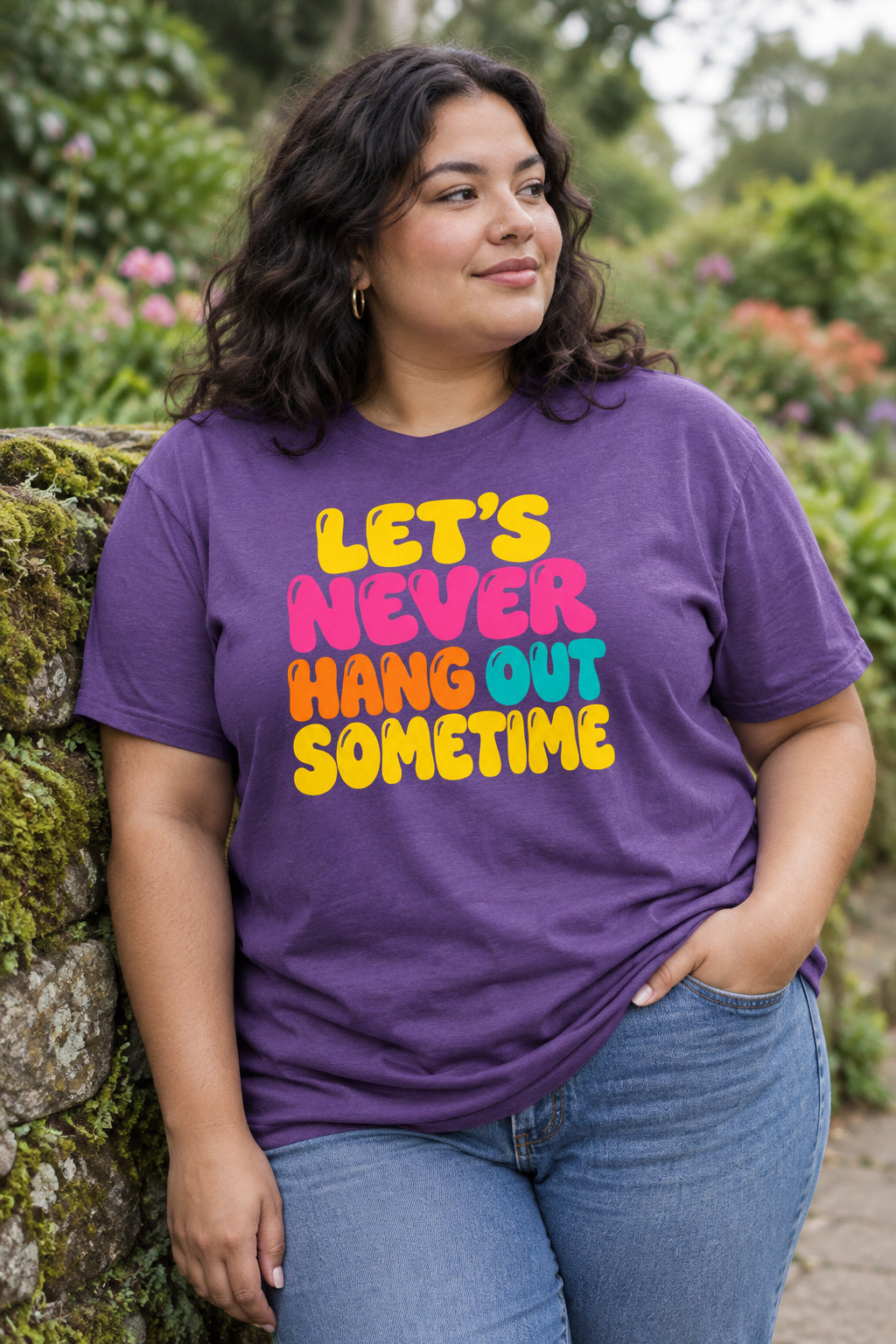
If you want a soft, everyday shirt with a clean drape, the Let's Never Hang Out tee is our first pick. It is made from 100% ring-spun cotton, with Sport Grey at 90% cotton and 10% polyester and the Dark Heather and Heather colors at 65% polyester and 35% cotton. The fabric weighs 4.5 oz/yd² (153 g/m²), which is substantial but still breathable.
What sets this shirt apart for sensory needs is the construction. The shirt uses shoulder-to-shoulder taping and is quarter-turned to avoid a crease down the center.
The neckline and sleeves are double-stitched for durability.
At $22.50, it sits at the same price as the other two tees in this list. The heathered color blends contain polyester, which is a difference in fiber content from the 100% cotton colors. If you need a fully polyester-free shirt, stick to the solid colors.
Best for: people who want a soft, structured cotton tee with flat shoulder seams and no center crease for everyday wear. Skip if: you need a fully polyester-free shirt in every color, since the heathered options blend polyester.
Overview of how ring-spun cotton yarn is produced and why it feels softer
Let's Never Hang Out is available in several colors, so you can check the fabric blend for the shade you prefer.
2. Law of 2 Feet: A Staple Tee With Reinforced Seams
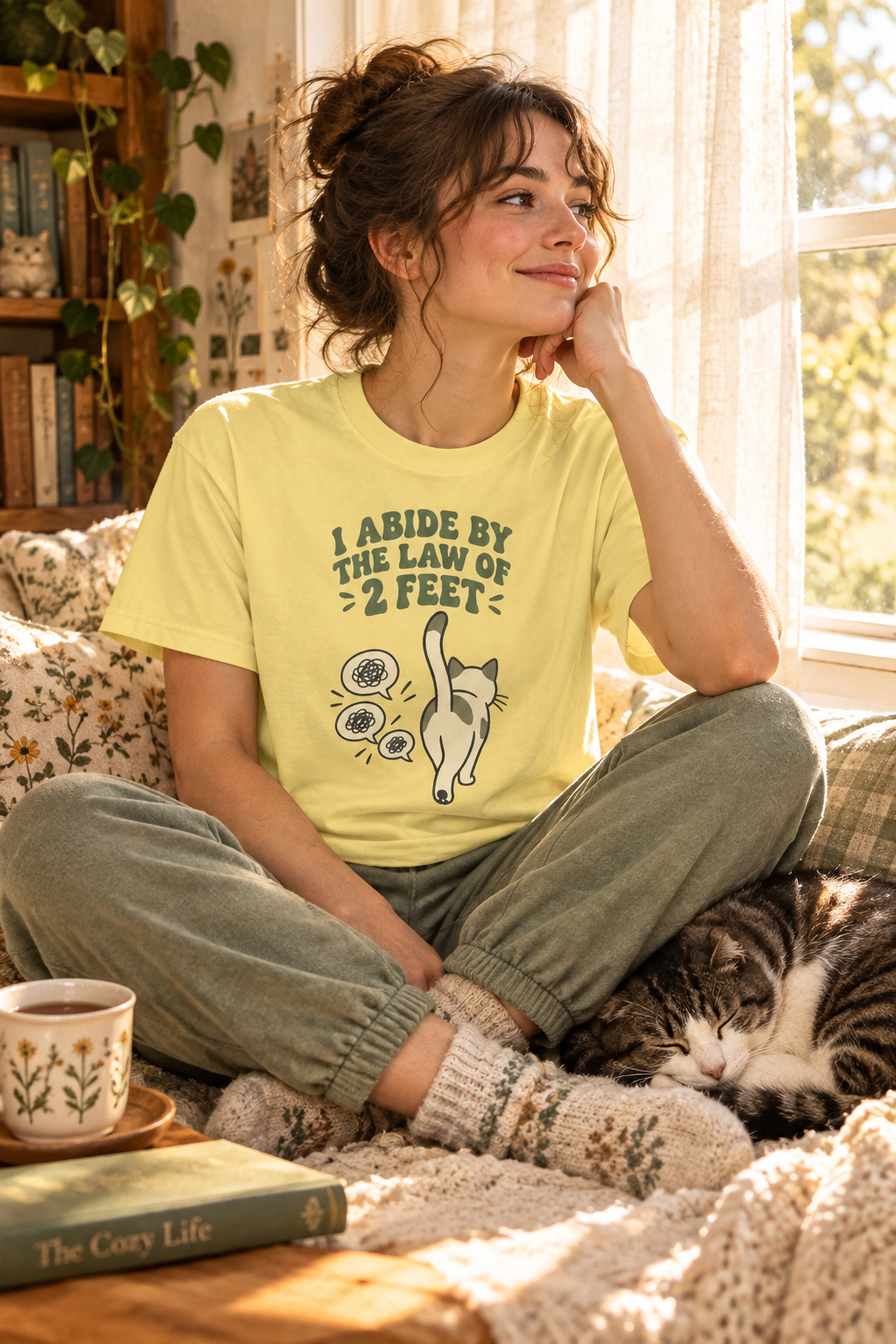
The Law of 2 Feet tee is built as a staple. It uses the same 100% ring-spun cotton base, with Sport Grey, Dark Heather and Heather, and Graphite Heather blends as options. The double stitching on the neckline and sleeves adds durability.
The White color may appear off-white due to fabric properties, and the Natural colorway may show dark speckles. It is priced at $22.50.
Best for: a reliable everyday base layer that holds up to frequent washing. Skip if: you want a very loose, oversized silhouette, since this is cut as a standard staple tee.
Law of 2 Feet lists the full color range and fabric breakdown on its product page.
3. I'm Not Arguing Tee: A Relaxed Unisex Fit for Everyday Wear
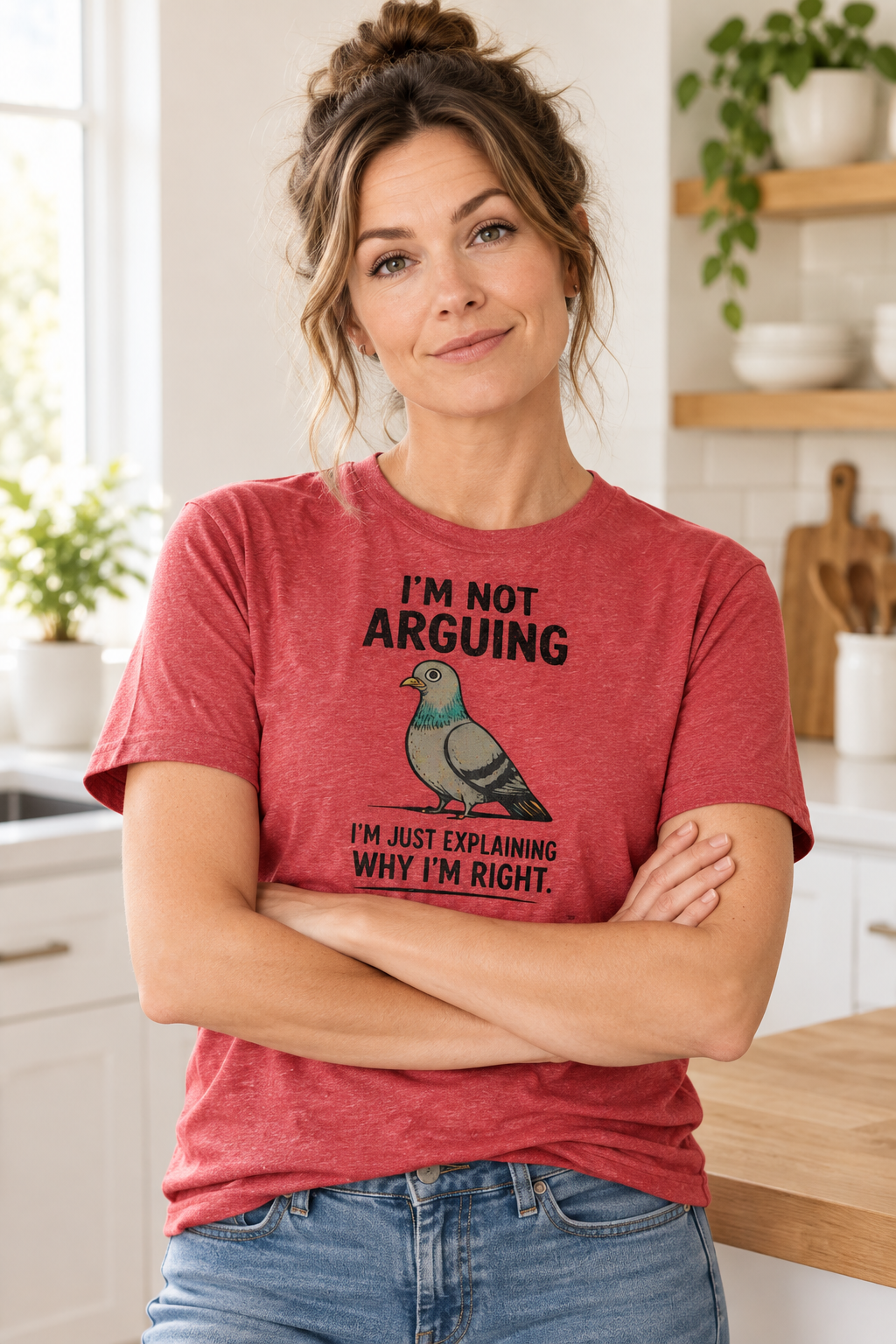
The I'm Not Arguing tee is cut with a relaxed unisex fit, so most people can order their usual size. If you want a looser, oversized look, sizing up one size is the simplest way to get it. The shirt is also made from 100% ring-spun cotton at 4.5 oz/yd² (153 g/m²), with the same blend options as the other tees.
It is printed direct-to-garment on demand and ships in 2 to 5 business days, then arrives in 3 to 8 days. Free shipping is offered on every US order. Care: machine wash cold, inside out, and tumble dry low. It is priced at $22.50.
Best for: a relaxed, easy-to-wear everyday tee with a slightly looser feel. Skip if: you prefer a fitted cut, since the unisex fit runs roomier than a typical women's silhouette.
Check the I'm Not Arguing tee page for current sizing before ordering.
Comparing Fabric, Fit and Price Side by Side
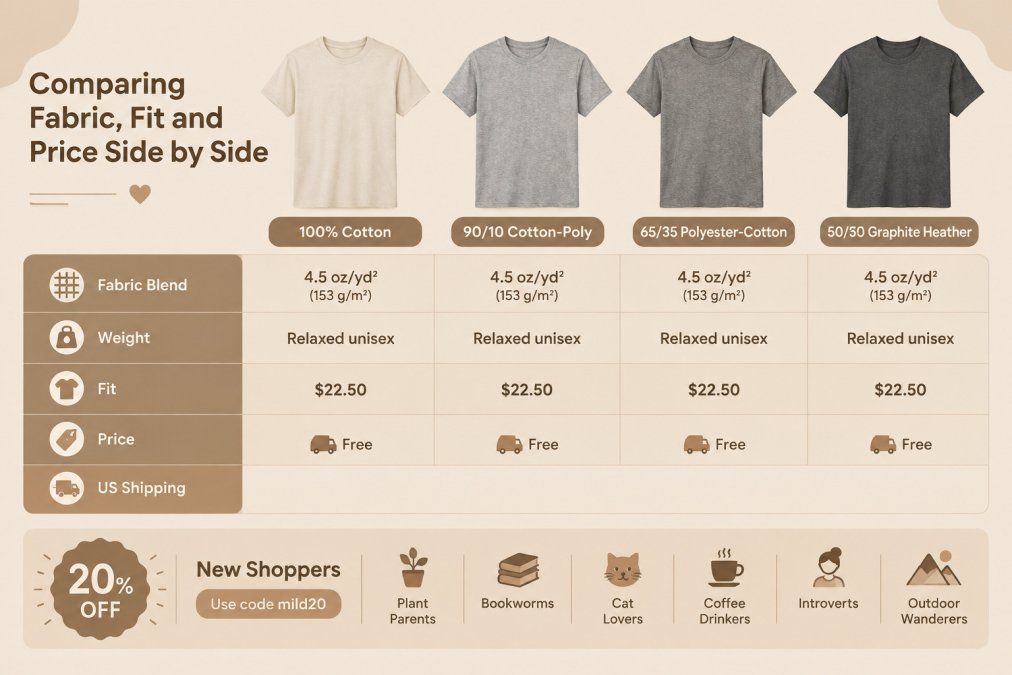
All three shirts share the same core fabric, so the differences come down to fit, color blend, and construction details. The table below summarizes fabric, fit, price, shipping and return details.
| Shirt | Fabric (main color) | Weight | Fit | Price (USD) | Shipping | Return Policy |
|---|---|---|---|---|---|---|
| Let's Never Hang Out | 100% ring-spun cotton | 4.5 oz/yd² | Standard, clean drape | $22.50 | Free on US orders | 30-day return (see site for details) |
| Law of 2 Feet | 100% ring-spun cotton | 4.5 oz/yd² | Standard staple cut | $22.50 | Free on US orders | 30-day return (see site for details) |
| I'm Not Arguing Tee | 100% ring-spun cotton | 4.5 oz/yd² | Relaxed unisex | $22.50 | Free on US orders | 30-day return (see site for details) |
Price is the same across all three, so fit and fabric blend should drive the decision. If you prefer the softest possible feel, stick with the 100% cotton colors. Heathered blends add polyester, which can change how the fabric breathes and feels against the skin.
For sensory shoppers, the return policy matters as much as the fabric. Customers can email [email protected] if they are not happy with an order.
Care also affects long-term softness. Machine wash cold, inside out, and tumble dry low. Cotton softens over time, but high heat can shrink the shirt and make seams feel tighter. If you are between sizes, consider sizing up for a looser fit that reduces pressure on the shoulders and chest.
For a deeper look at fabric identification, see Federal Trade Commission guidance on fiber content labeling.
Sensory Preferences Are Individual: How to Test Before You Buy
Sensory preferences vary widely. What feels soft to one person can feel scratchy to another, so the best test is a small one. Start with a single shirt in a color you already like, wear it for a few hours, and notice where it rubs or pulls. Pay attention to the neckline, the sleeve openings and any printed areas.
Washing can change how a shirt feels, so test after a few washes if possible. Cotton tends to soften over time, but cheap knits can pill or stiffen. Keep the care label in mind: cold water and low-heat drying help preserve the fabric.
Mild Statement LLC provides a support contact on its site for questions about fit or an order. Email [email protected] with any questions about fit or an order.
Sensory Friendly Clothing Brands and Where Mild Statement Fits
Sensory friendly clothing covers many designs. Mild Statement LLC is a disabled veteran owned small business that prints each tee on demand, so you are buying a shirt made for you rather than a mass-produced item sitting on a shelf.
The tees here are not marketed as medical or therapeutic garments. They are soft cotton shirts with careful construction. If your sensory needs are specific, the most useful step is to try a shirt, note how it feels, and adjust your choice from there. For general information on sensory processing, the STAR Institute overview of sensory processing is a helpful starting point.
Choosing Your Next Soft Shirt for Sensory Comfort
Start with the fabric. Choose 100% ring-spun cotton if you want the softest feel and a light, breathable weight. Next, consider fit: a standard cut suits most people, and a relaxed unisex cut works well if you prefer room to move.
Finally, test before you commit. Wear the shirt for a few hours, wash it once, and see how it feels after that. If you want a soft, everyday shirt at a fair price, Let's Never Hang Out and Law of 2 Feet are good places to begin. Use code mild20 for 20% off your first order.
Frequently Asked Questions
What is the best fabric for sensory issues in a shirt?
Many people with sensory sensitivities find 100% cotton easier to wear than synthetic blends, because cotton tends to feel softer against the skin. Ring-spun cotton is a good choice to look for, since the spinning process produces a smoother yarn. Breathability also matters, so a lightweight jersey knit at about 4.5 oz/yd2 can feel less confining than a heavy fleece. Sensory preferences differ, so test a fabric on a small area of skin before committing to a full shirt.
Are tagless shirts better for sensitive skin?
For many people who are sensitive to itchiness, removing a neck tag removes a common source of irritation. Tagless or printed-label designs keep the collar area smooth, which can make a shirt easier to wear all day. The Mild Statement tees use double-stitched necklines and sleeves for durability. If a tag still bothers you, cutting it out is an option, though it may affect the shirt's care label information.
What counts as sensory friendly clothing for adults?
Sensory friendly clothing for adults usually means soft fabric, flat or minimal seams, no scratchy tags, and a fit that does not pinch or pull. Adults with sensory processing issues often prefer relaxed or unisex cuts, since tight sleeves and stiff collars can be distracting. Because sensory needs vary widely, the best approach is to choose a few basics you can wear comfortably and build from there rather than relying on one category label.
Which sensory friendly clothing brands should I consider?
Brands that focus on soft basics, tagless construction and relaxed fits are a good place to start when shopping for sensory friendly clothing. Mild Statement is one option; its graphic tees are made from 100% ring-spun cotton or cotton-polyester blends, priced at $22.50 each, with free shipping on US orders. Compare fabric content, weight and return policies across brands, and read sizing notes carefully since relaxed unisex fits run differently from fitted styles.