 Listicle
How to Build a Cozy Home Office Wardrobe That Still Looks Professional
Last Updated: November 14, 2026
Quick Summary
Cozy home office apparel combines soft, breathable fabrics like ring-spun cotton with relaxed fits that still look presentable on camera. Build a small capsule of coordinated tops and bottoms so every piece matches, then add a structured layer for video calls.
- Choose breathable cotton or cotton-rich blends that resist clinging during long sitting stretches.
- A capsule of 10 to 15 coordinated pieces covers desk days, errands, and video calls.
- Solid mid-tones read cleanly on camera, while busy prints can shimmer or blur.
- Look for shoulder-to-shoulder taping to keep seams flat and necklines from stretching.
- Match your mid layer weight to your base, such as a midweight overshirt over a 4.5 oz/yd² tee.
Table of Contents
- Why Cozy Apparel for Home Office Wear Beats Real Clothes (Most Days)
- The Fabrics That Keep You Comfortable From 9 to 5
- How to Put Together Work From Home Outfit Sets That Mix and Match
- Stylish Work From Home Outfits: Building a Capsule Wardrobe
- Professional Work From Home Outfits for Video Calls and Client Meetings
- Comfortable Office Clothes Men's Edition: Relaxed Fit Without the Slouch
- Layering Pieces and Transition Outfits for Desk-to-Dinner Days
- Shop the Mild Statement Tees That Fit Your Home Office Rotation
- Frequently Asked Questions
Why Cozy Apparel for Home Office Wear Beats Real Clothes (Most Days)
Cozy home office apparel is clothing built for long hours at a desk, combining soft fabrics and relaxed fits with enough structure to look presentable on camera.
That middle ground is where Mild Statement lives.
Here is what most guides get wrong: they treat comfort and polish as opposites. They are not. A shirt can feel like a favorite blanket and still pass on a Tuesday morning call.
Below, we break down exactly how to build that rotation, from fabric choices to layering to what to wear when the camera turns on.
The Fabrics That Keep You Comfortable From 9 to 5
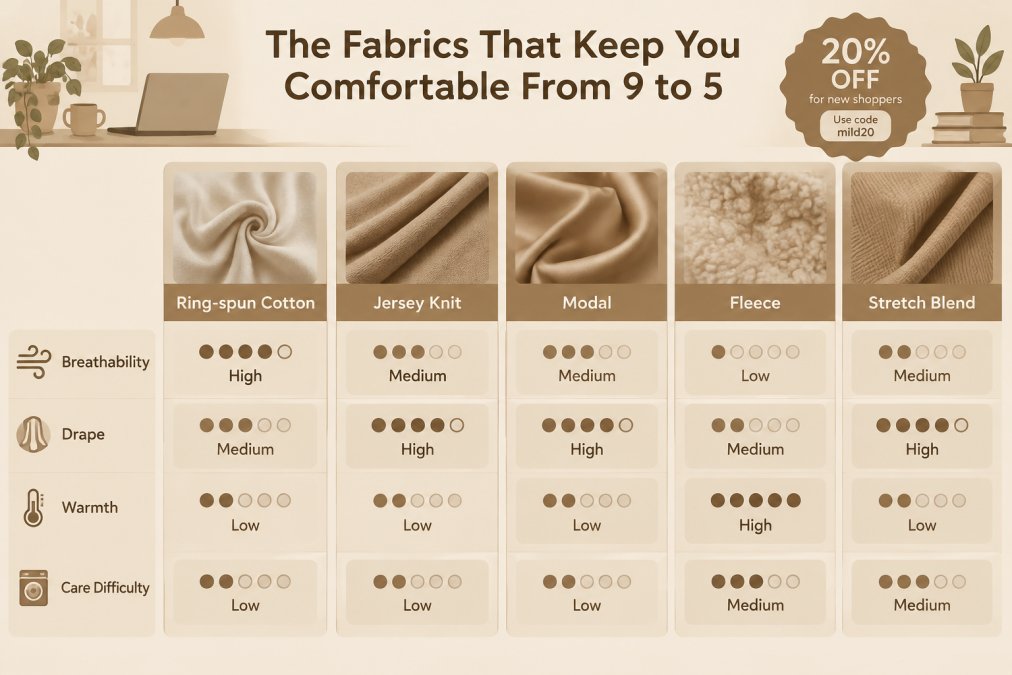
The best fabric for all-day desk wear is breathable cotton or a cotton-rich blend, because it moves air, resists clinging, and softens with each wash. Synthetic-heavy fabrics trap heat during long sitting stretches.
Ring-spun cotton sits at the top of our list. The spinning process smooths the fibers, so the fabric feels softer against skin than standard cotton and holds its shape through repeated washing. Our Little Treat Club and Coffee First tees use 100% ring-spun cotton at a lightweight 4.5 oz/yd², a weight suited to everyday indoor wear.
Breathable Fabrics and Stretch Blends Worth Owning
- Ring-spun cotton: soft, breathable, gets better with washing. Best for tees and base layers.
- Jersey knit: the classic t-shirt knit, with natural stretch and good drape.
- Modal: silky and cool, often blended into loungewear. Drapes well but needs gentle care.
- Fleece: warm and cozy for cold rooms, but too heavy for video calls.
- Stretch blends: cotton with a small amount of spandex adds give for sitting, without looking like gym wear.
If you want to judge softness before buying, how to tell if cotton shirts are soft walks through what to look for in the fabric description.
How to Care for Soft Fabrics So They Last
Soft fabrics stay soft when you protect the fibers. Wash cold, turn the garment inside out, skip the dryer's high heat, and avoid fabric softener, which coats fibers and reduces breathability over time. Our tees carry the care label: machine wash cold, inside out, tumble dry low.
Watch out: drying cotton on high heat is the fastest way to shrink a shirt and stiffen the print. Air dry when you can.
How to Put Together Work From Home Outfit Sets That Mix and Match
A work from home outfit set works when every top matches every bottom, so you can get dressed without thinking.
Start with the base. One pair of stretch pants or joggers, one pair of pull-on chinos, and one pair of dark jeans cover nearly every day.
Good Housekeeping's guide to building a capsule wardrobe makes the same point: fewer pieces that all coordinate beat a full closet where nothing matches.
The payoff is speed. You open the drawer, grab any top, grab any bottom, and you are dressed in under a minute.
Stylish Work From Home Outfits: Building a Capsule Wardrobe
A cozy home office capsule wardrobe is a small, coordinated set of garments, usually 10 to 15 pieces, that covers every situation from desk days to errands. It stays stylish because nothing in it is an outlier. But most guides stop at the list. The real utility comes from adapting that list to your climate and your home's temperature swings, something generic capsules ignore.
Here is how we would build one, with climate-specific adjustments:
- Three bottoms: stretch pants, joggers, dark jeans
- Five tops: soft tees, one button-up, one sweater
- Two layering pieces: a cardigan jacket and a light overshirt
- One "camera-ready" outfit: a polished tee plus a structured layer
That is eleven pieces. It handles video calls, grocery runs, and desk-to-dinner without a single panic moment.
How to Adapt Your Capsule for Your Climate
A capsule built for a drafty apartment in a cold climate looks different from one for a warm, humid home office. The key is fabric weight and layer count, not more pieces.
- Cold climates or poorly insulated rooms: Swap one lightweight tee for a midweight cotton (5.0-5.3 oz/yd²) and add a fleece or heavy knit cardigan as a third layer. Keep base layers breathable so you don't overheat when the heat kicks on.
- Warm or humid climates: Prioritize lightweight ring-spun cotton (4.5 oz/yd²) and modal blends that wick moisture. Skip fleece entirely and use a single overshirt as your only layer for air-conditioned rooms.
- Four-season regions: Build around a 4.5 oz/yd² tee as your base and add a midweight overshirt and a lightweight cardigan. This trio lets you adjust from a 65°F morning to a 75°F afternoon without changing your base.
For the tee layer, minimalist graphic tees for adults shows how a simple design keeps an outfit looking intentional rather than loud.
Watch out: buying a capsule all at once for a climate you haven't tested can leave you with pieces that never get worn. Start with the base layer and one layering piece, then add based on what you actually reach for.
Professional Work From Home Outfits for Video Calls and Client Meetings
A professional work from home outfit is one that reads as put-together from the chest up while staying comfortable below the desk. The camera only sees your top half, so that is where the effort goes.
Reach for a shirt with a clean neckline and no distracting wrinkles. A structured cotton tee in a solid color works better than a slouchy one, because the fabric holds its shape on screen.
Color matters on camera. Solid mid-tones read cleanly; busy prints can shimmer or blur. Keep the top simple and let one accessory or a single subtle graphic do the talking.
Comfortable Office Clothes Men's Edition: Relaxed Fit Without the Slouch
Comfortable office clothes for men come down to fit, not fabric alone. A relaxed fit that skims the body looks sharp; one that hangs off the shoulders looks like pajamas.
The rule we use: relaxed in the body, tidy at the seams. Shoulder seams should sit at the edge of your shoulder, not slide down.
Relaxed unisex tees are an easy starting point. Order your usual size for a clean fit, or size up one for a looser, oversized look.
For men who want low-key picks, the best graphic tees for introverts covers designs that stay understated.
Layering Pieces and Transition Outfits for Desk-to-Dinner Days
Layering is how a home office outfit moves from desk to dinner without a full change. Two or three light layers let you control temperature and shift the formality in seconds. But effective layering is not just about adding pieces, it is about choosing fabrics that work together to manage moisture and heat while you sit for hours.
The layering stack we recommend:
- Base: a soft ring-spun tee (4.5 oz/yd²) that wicks moisture and stays breathable
- Mid: an overshirt or flannel in a midweight cotton or cotton-blend
- Outer: a cardigan jacket or light knit that traps warmth without bulk
Remove a layer to cool down, add one to dress up. A plain tee under an overshirt looks casual; swap in a structured tee and button the overshirt and it reads smart casual.
The Mechanism: Why Fabric Order Matters
Layering works by creating microclimates. The base layer's job is to move moisture away from your skin, ring-spun cotton does this well because its smooth fibers resist clinging when you sweat. The mid layer adds insulation and structure, while the outer layer blocks drafts. If your base layer is synthetic-heavy, it traps heat and moisture, making you feel clammy even in a cool room.
A common pattern among remote workers is to treat the base layer as disposable and invest in the outer layer. The opposite works better: a quality breathable base makes every layer above it more effective.
Ergonomic Considerations for Long Desk Hours
Layering affects how you sit. A bulky mid layer can restrict shoulder movement and encourage slouching, while a tight base layer can dig in at the waist after an hour of sitting.
This is also where fabric quality shows. A tee that drapes well under a layer looks polished; one that bunches looks messy.
Watch out: layering a heavy fleece over a lightweight tee can trap heat and make you sweat during focused work.
Shop the Mild Statement Tees That Fit Your Home Office Rotation
The right home office rotation starts with a base layer you actually want to wear.
Here is how our tees fit different desk days:
| Tee | Fabric | Best For | Price |
|---|---|---|---|
| Little Treat Club | 100% ring-spun cotton, 4.5 oz/yd² | Slow mornings and self-care days | $22.50 |
| Introverts Unite | 100% ring-spun cotton, 4.5 oz/yd² | Quiet focus days, low-key calls | $22.50 |
| Coffee First | 100% ring-spun cotton, 4.5 oz/yd² | Early starts before the first meeting | $22.50 |
| Read More Imagine More | 100% cotton, 5.0-5.3 oz/yd² | A structured, camera-ready look | $22.50 |
| My Plants Know My Secrets | 100% ring-spun cotton, 4.5 oz/yd² | Everyday layering under an overshirt | $22.50 |
Every tee comes in a relaxed unisex fit, sizes S-3XL, with shoulder-to-shoulder taping for a clean line.
Shop the Little Treats collection to start your rotation, or browse the full range at mildstatement.com.
Building a home office wardrobe that feels good and looks professional is not about buying more.
Get started with Mild Statement and build a home office rotation you will actually reach for every morning.
Frequently Asked Questions
What are some comfy clothes for working from home that still look put together?
Start with a soft-touch base like a ring-spun cotton tee, then add one structured layer such as a cardigan jacket or open button-up. A relaxed fit tee in a 4.5 oz/yd² fabric keeps you cool through the day, while a slightly weightier cotton (5.0-5.3 oz/yd²) holds its shape for video calls. Pair with stretch pants or pull-on trousers and you have a cozy home office outfit that reads polished from the waist up and feels like loungewear from the waist down.
How can I make a work-from-home outfit look professional on camera?
The camera only sees your top half, so put the effort there. Choose a collared shirt or a clean crew-neck tee under a cardigan jacket, avoid busy prints near your face, and check that the shoulders fit. A tailored layer in a solid color photographs better than a slouchy hoodie. Keep a button-up on the back of your chair for surprise calls, and you can stay in comfortable office clothes men's or women's styles below the desk without anyone knowing.
What is the 3-3-3 rule for clothing, and can it help build a work-from-home wardrobe?
The 3-3-3 rule is a packing and capsule wardrobe guideline: roughly three tops, three bottoms, and three pairs of shoes that all mix together. For a cozy home office wardrobe, adapt it to three base tees, three layering pieces, and three bottoms. Because every piece matches every other piece, you get nine outfits from nine items. It is a simple way to keep stylish work from home outfits on rotation without staring into the closet every morning.
How do I choose comfortable clothes for a home office across different seasons?
Build around breathable fabrics and layering pieces rather than buying separate summer and winter sets. A lightweight ring-spun cotton tee works alone in warm months and under a fleece or cardigan in cold ones. Add a modal or jersey knit layer for insulation and a moisture-wicking base for warmer rooms. Rotating the same elevated basics through the year keeps your capsule wardrobe small and your all-day comfort consistent.