 blog
blog
Affordable Sustainable Clothing Brands 2026
Table of Contents
- What Defines Sustainable Clothing Brands
- How to Build a Sustainable Wardrobe on a Budget
- Benefits of Print-on-Demand Clothing
- How to Identify Greenwashing in Fashion
- Key Criteria for Ethical Manufacturing
- Natural Fibers vs. Synthetic Alternatives
- Consider two scenarios:
- Making Your Sustainable Clothing Investment Last
- Frequently Asked Questions
Last Updated: September 28, 2026
What Defines Sustainable Clothing Brands
Sustainable clothing brands prioritize environmental responsibility and ethical labor practices throughout their supply chain. This means using eco-friendly materials, minimizing waste, ensuring fair wages for garment workers, and maintaining transparency about where and how clothes are made.
True sustainable clothing brands consider their entire operation: renewable energy in factories, water conservation during production, non-toxic dyes, and end-of-life disposal options. They reject fast fashion's constant new collections and focus on quality over quantity.
What separates these brands from greenwashing is accountability. Legitimate sustainable clothing brands trace their supply chain, provide certifications like fair trade credentials, and publish impact reports.
At Mild Statement LLC, we understand that sustainable doesn't mean sacrificing comfort or style. Our print-on-demand approach eliminates overproduction waste entirely, nothing gets made until someone orders it. Every shirt is printed fresh, and shipped free.
How to Build a Sustainable Wardrobe on a Budget
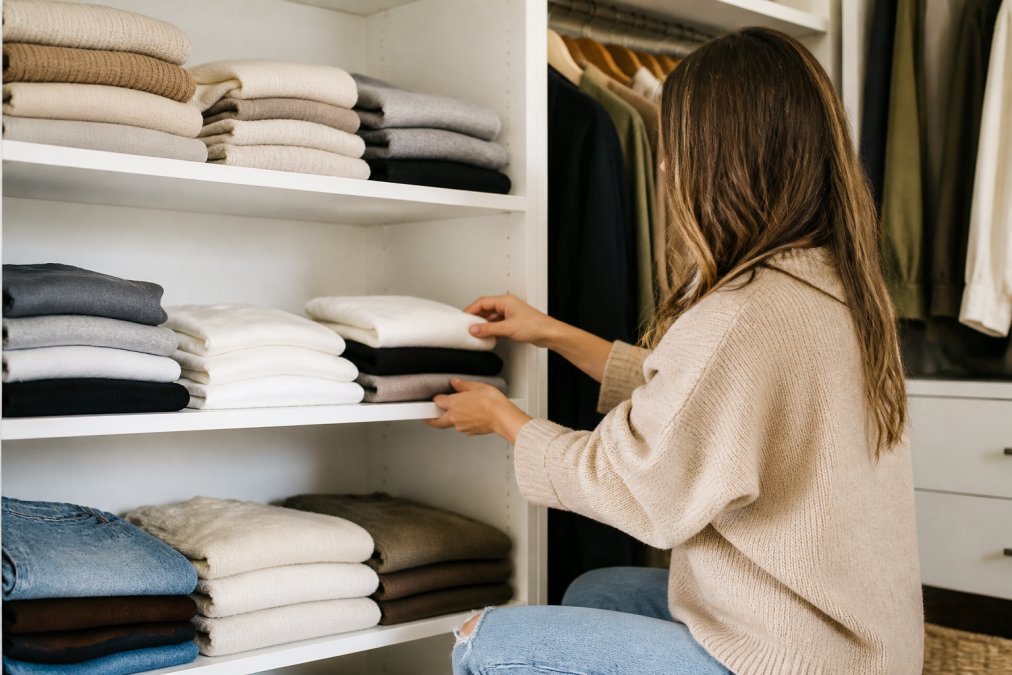
Building a sustainable wardrobe means buying fewer pieces that last longer and work together. Create a capsule wardrobe of versatile basics in neutral tones, then add personality through graphic tees and statement pieces.
Assess what you already own before buying anything new. Identify gaps in your current collection and pieces that would extend the life of what you have. A well-made neutral t-shirt becomes the foundation of your wardrobe.
Quality matters more than quantity. One durable shirt worn for years costs less per wear than five cheap shirts that fall apart after a few months. Calculate cost-per-wear: divide the price by how many times you'll realistically wear it. A $40 shirt worn 100 times costs $0.40 per wear. A $15 shirt worn 10 times costs $1.50 per wear.
Focus on timeless designs. Graphic tees with clever, relatable designs age better than trendy prints and stay relevant longer.
Benefits of Print-on-Demand Clothing
Print-on-demand manufacturing eliminates overproduction, the biggest waste problem in fashion. Clothing gets made only after purchase, eliminating unsold inventory and landfill waste.
This model also reduces buyer risk. Many print-on-demand brands offer straightforward return policies because they're confident in their quality.
The environmental impact is significant: no storage energy costs, no disposal waste, and dramatically reduced water usage since garments aren't manufactured speculatively.
Print-on-demand offers customization without bulk-order minimums, enabling small businesses and independent designers to operate sustainably without massive capital investment.
How to Identify Greenwashing in Fashion
Greenwashing happens when brands make vague environmental claims without evidence. Watch for "eco-friendly," "natural," or "sustainable" with no certifications, supply chain transparency, or specific metrics.
Real sustainable clothing brands provide concrete information:
- Specific material percentages (e.g., "92% organic cotton, 8% recycled polyester")
- Third-party certifications (Fair Trade Certified, Global Organic Textile Standard)
- Supply chain transparency (naming factories and their locations)
- Measurable impact (water saved, carbon reduced, wages documented)
- Regular sustainability reports published publicly
Greenwashing brands use vague language and avoid specifics, highlighting one eco-friendly practice while ignoring others. A brand using organic cotton but paying poverty wages and dumping toxic dyes is still causing harm.
Check whether a brand answers these questions directly:
- Where are your factories located and who owns them?
- What certifications do you hold?
- How much do you pay garment workers?
- What materials do you use and why?
- What's your actual environmental impact?
If a brand dodges these questions or provides only marketing language, that's greenwashing. Legitimate sustainable clothing brands welcome scrutiny because they have nothing to hide.
Key Criteria for Ethical Manufacturing
Ethical manufacturing starts with fair wages. Garment workers should earn living wages in their region, not minimum wage that forces families into poverty.
Ethical manufacturing includes safe working conditions: proper ventilation, reasonable hours, breaks, clean water and bathrooms, and the right to organize without retaliation.
Ethical brands can name their factories, explain their vetting process, and document improvements over time. They work with the same factories long-term rather than constantly switching for cheaper labor.
Ethical manufacturing means treating wastewater properly, using non-toxic dyes, minimizing chemical runoff, and reducing energy consumption to protect workers and surrounding communities.
Look for brands that conduct regular audits and publish findings, including problems and solutions. Transparency and continuous improvement matter more than perfection.
Ethical brands invest in supply chain relationships, paying more for responsible manufacturers because cheap labor and unsafe conditions aren't sustainable long-term.
Natural Fibers vs. Synthetic Alternatives
The choice between natural and synthetic fibers is not a simple "natural is better" equation. Each fiber type has distinct environmental and durability trade-offs that directly affect how long a garment lasts and its true cost-per-wear.
Understanding Natural Fibers
Organic cotton avoids synthetic pesticides and fertilizers, protecting soil health and farm workers. However, producing one t-shirt requires roughly 700 gallons of water. Cotton fibers are delicate and can pill after repeated washing.
Bamboo viscose grows quickly without pesticides. Processing uses chemicals that must be properly managed; closed-loop production recycles 99% of them.
Linen requires minimal pesticides and is exceptionally durable, lasting 100+ wears. However, it wrinkles easily and requires more frequent ironing, which uses energy, and is more expensive upfront.
Hemp requires almost no pesticides or fertilizers and is extremely durable, rivaling linen. Hemp production is environmentally gentle, but the fabric is stiffer and less comfortable against skin unless blended with softer fibers. Hemp is rarely used in affordable sustainable brands due to processing costs.
Understanding Synthetic Fibers
Polyester is derived from petroleum and requires significant energy to produce. However, it's exceptionally durable, resisting pilling and fading, and can withstand 200+ wears. Polyester dries quickly and requires less energy to care for.
Recycled polyester diverts plastic waste from landfills and requires 30-40% less energy than virgin polyester while offering the same durability.
Consider two scenarios:
The most sustainable fiber is the one that lasts longest in your wardrobe. This depends on:
- Fabric weight:
- Fiber structure: Tightly twisted yarns and dense weaves last longer than loose, open constructions
- Seam quality: Reinforced seams and proper thread tension determine whether a garment falls apart at the seams before the fabric wears out
- Finishing: Garments treated to resist pilling or fading last longer, though some treatments use chemicals
Blended Fabrics: The Practical Middle Ground
Most durable affordable sustainable clothing uses blends:
- Cotton-polyester blends (e.g., 60/40 or 70/30) combine natural comfort with synthetic durability
- Linen-cotton blends reduce wrinkles while maintaining breathability
- Bamboo-polyester blends provide softness with extended lifespan
What to Look For When Buying
Instead of fixating on fiber type, evaluate:
- Fabric weight and construction: Check the GSM (grams per square meter) if listed.
- Seam reinforcement: Look for double-stitched seams, especially at stress points (shoulders, underarms, side seams).
- Fiber blend composition: Understand what you're buying and why. A brand should explain their fiber choices, not just list them.
- Care requirements: Garments requiring special care (hand-wash, lay-flat dry, no heat) may not last as long in real-world use if you can't maintain them properly.
- Brand durability claims: Reputable brands back durability claims with warranty periods or wear guarantees.
Making Your Sustainable Clothing Investment Last
Proper care extends clothing lifespan dramatically, but most guides stop at washing instructions. True longevity requires understanding when and how to repair, which repair methods work for different fabrics, and how to recognize when a garment has reached genuine end-of-life.
Washing and Storage Fundamentals
Learning to Repair: Skills That Pay for Themselves
When to Repair vs. Replace
Repair makes sense when:
- The damage is localized (a seam, a small hole, a loose button)
- The garment still fits and you wear it regularly
- The fabric is still structurally sound elsewhere
Replace when:
- Multiple seams are failing or fabric is thinning throughout
- Elastic is shot (waistbands, cuffs) and cannot be easily replaced
- The fabric has permanent stains or damage that affects wearability
Community Repair Resources
Responsible End-of-Life Disposal
Frequently Asked Questions
What makes a clothing brand truly sustainable?
A truly sustainable clothing brand prioritizes ethical manufacturing, uses natural fibers or responsibly sourced synthetics, maintains supply chain transparency, and ensures fair wages for garment workers. Look for brands that disclose their production methods, pursue fair trade certification, minimize water consumption and carbon footprint, and avoid non-toxic dyes. Circular economy practices like repair services and take-back programs also indicate genuine commitment.
How can I find affordable sustainable clothing brands without falling for greenwashing?
Research a brand's specific certifications and supply chain details before purchasing. Greenwashing often relies on vague claims like 'eco-friendly' without evidence. Ask for proof: certifications from recognized bodies, transparency reports, and clear labor practices. Avoid brands making broad environmental claims without backing them up. Check if they disclose factory locations and worker conditions. Print-on-demand brands naturally reduce waste by producing only what's ordered, making them inherently more sustainable than mass-production models.
Why is print-on-demand clothing better for the environment?
Print-on-demand eliminates overproduction and textile waste by creating garments only when ordered. Traditional manufacturing produces excess inventory that often ends up in landfills. This model reduces water consumption, cuts carbon emissions from transportation and storage, and minimizes the environmental impact of unsold inventory. It also allows smaller brands and veteran-owned businesses to operate sustainably without massive upfront production costs, making ethical fashion more accessible and affordable.
How do I know if a sustainable clothing brand is actually affordable?
Compare cost-per-wear rather than just upfront price. A higher-quality sustainable piece worn 100 times costs less per wear than a cheap fast-fashion item worn 10 times. Look for brands offering free shipping. Many sustainable brands, especially small veteran-owned businesses, price competitively because they skip the marketing overhead of larger retailers. Check customer reviews for durability and fabric quality to ensure your investment lasts.